





In 2026, a business website is the same as being in the Yellow Pages during the 2000s, it is the baseline for legitimacy. However, the bar for success has risen dramatically. We have surpassed the era of simple keyword searches and into the age of Artificial Intelligence (AI) and Answer Engines. Today, a significant portion of searches end without a click, meaning your brand must be authoritative enough for this technology to cite it directly in the search summary.
Despite this shift, many small to mid-size businesses (SMBs) still view web design as a simple administrative cost rather than strategic assets. They opt for low-cost templates appearing acceptable visually but lack technical infrastructure to communicate with modern AI algorithms. To compete with larger competitors and capture the digital mouse advantage, businesses must invest in custom digital assets that they truly own.
This article outlines why custom website design is the superior financial strategy for forward-thinking businesses, focusing on ownership, technical performance, and the critical role of brand authority in the new search landscape.
Key Takeaways
- Ownership is Critical: Unlike social media or rented template platforms, a custom website is a capital asset you own, immunizing you against algorithm changes and platform shutdowns.
- The 400% ROI Factor: While upfront costs are higher, optimized custom websites for SMBs often report a Return on Investment (ROI) exceeding 400% due to increased conversion rates and lower long-term maintenance.
- Mobile Revenue Risk: With high abandonment rates on sites with poor mobile experiences, a fully responsive custom design is a mandatory revenue safeguard.
- AI Trust Signals: Generic templates often struggle to send the E-E-A-T (Experience, Expertise, Authoritativeness, Trustworthiness) signals required to be cited by AI search engines like Google Gemini.
- CAC Reduction: Efficient, custom branding builds recognition that can lower Customer Acquisition Costs (CAC), which have risen significantly in recent years.
- The Bloat Penalty: Templates often come with unused code (bloat) slowing down load times; custom code is streamlined for the speed AI demands.
1. The Hidden Cost of Cheap: Templates vs. Custom Assets

When choosing a website provider, many business owners ask, “I want a simple website; how much does it cost?”. This question often leads them to low-cost templates. However, the initial savings of a template are frequently an illusion masked by technical debt.
A. The Trap of Code Bloat
Template websites attempt to be everything to everyone. To do so, they are packed with excessive features and heavy code that your specific business may never use. This overhead code (bloat) significantly hinders site performance.
- The Speed Consequence: Research indicates that nearly half of visitors will bounce (leave) if a site takes longer than two seconds to load.
- The AI Penalty: Search engines prioritize fast, efficient sites. Bloated templates struggle to achieve the speed metrics required for top-tier rankings.
B. Scalability and Growth
Custom websites are built with a clean code philosophy. Every line of script serves a purpose. This not only ensures blazing-fast load times but also allows for seamless scalability. As your business grows, a custom site can easily integrate with new Customer Relationship Management (CRM) or Enterprise Resource Planning (ERP) tools. Templates, by contrast, are rigid; forcing them to adapt often requires expensive workarounds or a complete rebuild, doubling your long-term investment.
2. E-E-A-T and The New Rules of AI Search

The digital landscape has shifted from traditional SEO (ranking for keywords) to Generative Engine Optimization (GEO), where the goal is to be the trusted answer provided by AI.
From Ranking to Citing
AI search engines like Google’s Search Generative Experience (SGE) do not just look for matching words; they look for trust. They utilize a framework called E-E-A-T:
- Experience: Does the content show firsthand knowledge?
- Expertise: Is the author a verified expert?
- Authoritativeness: Is the brand cited by other trusted sources?
- Trustworthiness: Is the site secure and accurate?
Custom websites allow developers to implement advanced Structured Data”(Schema markup) that highlights these specific E-E-A-T signals to AI bots. Generic templates often lack the architectural flexibility to speak this language to AI, rendering your business invisible in AI-generated summaries.
3. Mobile-First is a Revenue Mandate

The internet has evolved from a desktop activity to a portable, on-the-go experience. With global e-commerce sales projecting massive growth, and mobile commerce accounting for the majority of retail sales, mobile optimization is no longer optional, but critical.
The Abandonment Rate
Statistics indicate that users are highly likely to abandon a website if the mobile experience is poor. If your template site requires users to pinch and zoom or features buttons that are too small to tap, you are actively repelling revenue. Google utilizes mobile-first indexing, meaning it judges your entire website based on smartphone performance. Custom responsive design ensures that your site’s layout adjusts fluidly to any screen size, preserving professional image and search rankings.
4. True Ownership in a “Rented” World
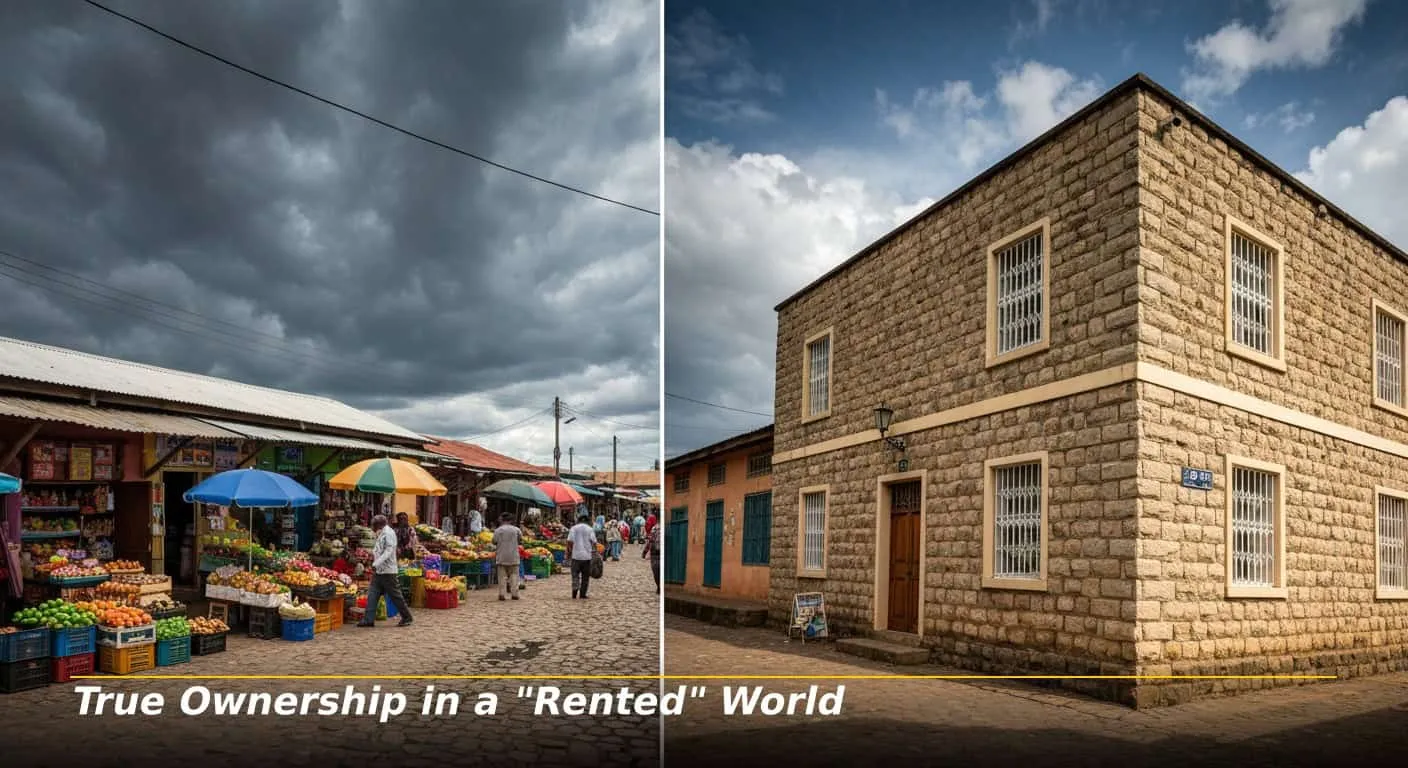
A website should be viewed as a piece of digital real estate.
- The Problem with Rented Land: Many businesses rely on social media pages or leased website platforms (where you pay a monthly fee for a template). This is risky. Social media algorithms change constantly, ad costs are rising, and platforms can disappear or ban accounts without warning. Custom websites are an asset you own. You control the content, code, and user data. It provides stability and independence, ensuring your digital storefront remains open 24/7 regardless of external platform changes.
- Security as a Differentiator: Custom websites allow for bespoke security measures. Because templates are used by thousands of businesses, they are frequent targets for hackers who can exploit a single vulnerability to breach thousands of sites at once. Custom development builds security from the ground up, protecting your customer data and earning the Trustworthiness signal that AI values.
5. The Word-of-Mouse: Reputation as Data

In the modern era, what others say about you holds more weight than what you say about yourself. Online reviews have evolved from simple social proof into critical data points that train AI on your brand’s sentiment.
- The 92% Trust Factor: Research reveals that 92% of customers read online reviews to determine their level of trust in a business. If a custom site does not prominently integrate and showcase these reviews, you are missing a vital psychological trigger for conversion. Furthermore, AI search engines analyze the sentiment of reviews across the web (Google, Yelp, BBB) to decide if they should recommend your business.
- The Experience Economy: To secure positive reviews, you must offer an experience worth talking about. This is known as the Word-of-Mouse effect, where digital sharing amplifies your reputation. Custom sites can facilitate this by creating a frictionless, delightful user experience (UX) that template sites cannot match. By asking enthralled customers for reviews and making the process easy via your website, you proactively shape the data AI uses to evaluate your brand.
6. The Project Management Hierarchy

Achieving a high-performing custom website requires the right team structure. Avoid hiring a designer first.
Marketer > Designer > Programmer
The most effective workflow starts with a Strategic Digital Marketer.
- The Marketer: Defines the business mission, target audience, and conversion goals.
- The Designer: Creates a visual look that supports the marketer’s strategy.
- The Programmer: Writes the clean code to make the design function efficiently.
Starting with a designer often results in a pretty site that fails to convert. Starting with a marketer ensures the site is built for your customers, addressing their intent and guiding users toward purchasing.
Conclusion: Investing in Your Digital Future
While a custom website requires a higher initial investment, typically between $3,800 and $9,500 for SMBs, the return is substantial. A custom site avoids the technical debt of frugal templates, secures data ownership, and positions the brand to be a trusted authority in the AI search era.
By prioritizing a solution that is mobile-responsive, speed-optimized, and built on E-E-A-T principles, you are not building a website; you are building a scalable sales engine that works for you 24/7.
FAQs About Futureproofing Your Digital Storefront in the Age of AI Search:
1. Why is it recommended to have a digital marketer lead the web design project rather than a graphic designer?
A good-looking site is not necessarily an effective one. Designers focus on aesthetics, but a strategic digital marketer focuses on user intent and business goals. The marketer acts as the project manager to ensure the content and layout are strategized to convert visitors into customers before the designer creates the visuals. This sequence (Marketer → Designer → Programmer) ensures it’s built for the customer, not just for vanity.
2. Why isn’t a good looking website enough to guarantee sales?
Visitors come to your site with a specific intention, usually to find information or solve a problem, not to admire the artwork. If a beautiful site is difficult to navigate or lacks clear information, visitors will leave. An effective design prioritizes information retrieval and ease of use over visual flair, directly impacting conversion rates.
3. Who are the Search Engine Spiders and why do they matter more than my human audience initially?
Search Engine Spiders are automated bots that crawl the web to index and rank pages. They are your most important audience initially because if they cannot read and rank your site effectively, customers will never find you. Custom websites are optimized with proper tags and structure specifically to please these spiders.
4. How does strong branding on a custom website reduce Customer Acquisition Costs (CAC)?
CAC has risen significantly in recent years. Strong branding fosters organic trust and recognition, meaning customers are 50% more likely to buy from you without you needing to spend heavily on ads. Driven brands allow you to acquire customers through organic search and referrals, which is significantly cheaper than paid acquisition.
5. If I get bad online reviews, should I try to delete them immediately?
You generally cannot just delete them, and you shouldn’t ignore them. Consistently bad reviews indicate a business problem, not a hot-head customer problem. It’s best to use this feedback to improve your operations. To recover, actively ask content customers for reviews to balance the sentiment. AI analyzes this aggregate sentiment to determine your trustworthiness.
6. Why are loyal customers more valuable than new ones in the AI era?
Retention costs less than acquisition. Loyal customers spend 67% more per purchase than new ones. Furthermore, a 5% increase in loyalty can boost profits significantly. In the AI era, loyal customers provide the positive behavioral signals and reviews that reinforce your brand’s authority to search engines.
7. What is Earned Media and why does AI prioritize it?
Earned Media refers to third-party mentions of your brand, such as press articles, directory listings, and customer reviews. AI search engines prioritize this because it is unbiased validation. Unlike your own website copy (which is self-promotion), Earned Media acts as independent proof of your expertise and authority.
