





In today’s rapidly evolving marketplace, the way consumers interact with businesses has fundamentally shifted. When consumers want to buy, they no longer venture to a store; most people first use their digital devices (desktops, laptops, tablets, and smartphones) to search for merchants and look up information they need to make a smart purchase.
In fact, research shows that 75% of consumers judge a company’s credibility based on its website design, and users form opinions about a website in only 0.05 seconds. Consequently, your website is often the first impression potential customers have of the business.
Despite this, many business owners continue to struggle bridging the gap between their organizational goals and digital presence. They still stubbornly follow non-productive or counter-productive practices. According to the Bureau of Labor Statistics, a significant percentage of small businesses fail within their first four years, often due to marketing operations difficulties.
Finding the right web design partner is therefore not only an IT decision, but a critical business strategy. This guide will walk you through the essential criteria, technical requirements, and strategic questions necessary to select a website designer who can deliver not only a digital brochure, but a powerful engine for business growth.
Part 1: Defining Effective Web Design
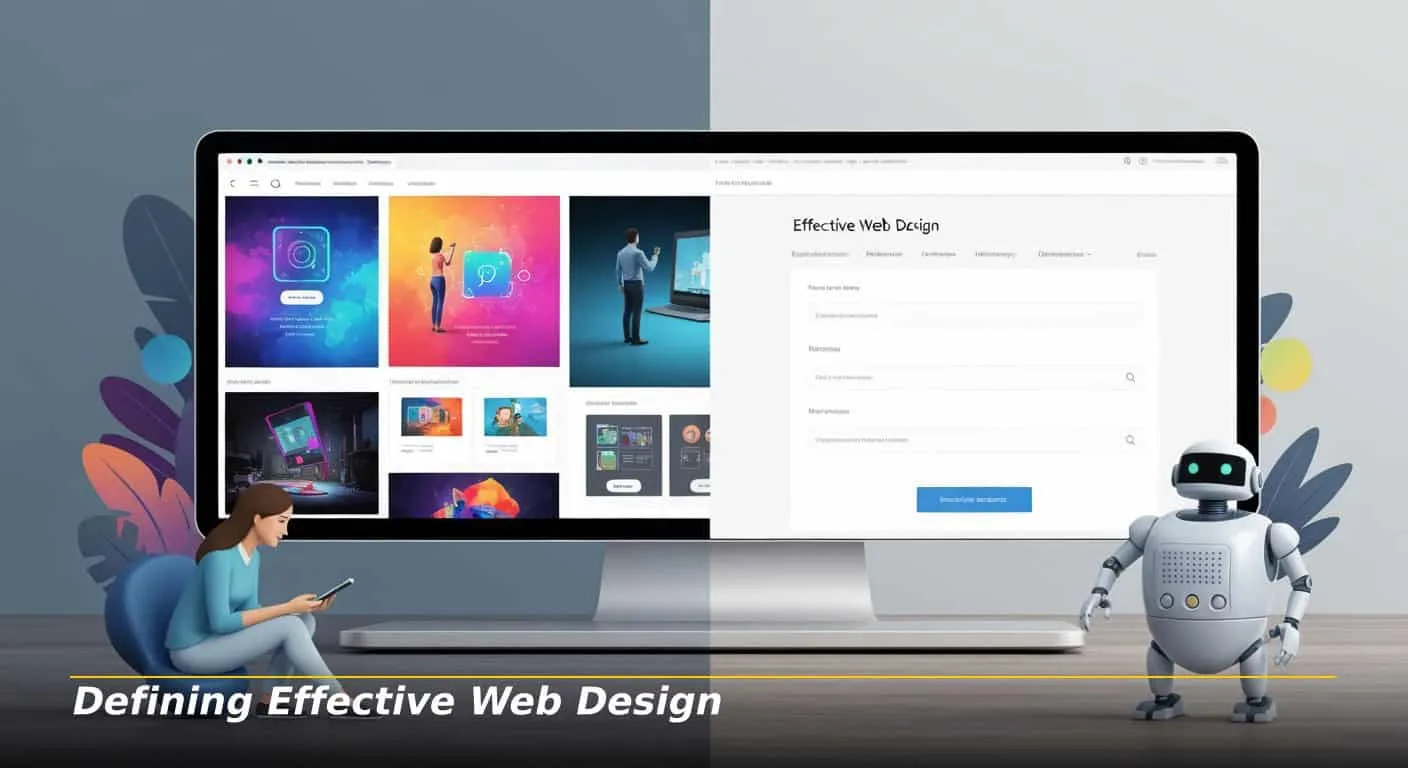
Before interviewing candidates, it is vital to understand what constitutes a successful website. A common pitfall is prioritizing aesthetics over function.
A. “Good Looking” vs. “Effective”
The majority assume that a visually appealing, mobile-friendly website is automatically an effective one, but this is not necessarily true. Visitors arrive at your website with an intention (to find information, products, or services) not admiring the design. If a website looks good but fails to provide relevant information quickly, visitors will leave, and you will lose the conversion opportunity.
An effective website design is one custom-built for your specific customers to effectively resonate with them. It must strike a balance between creative design and intelligent on-site search engine optimization (SEO). This is because your website has two distinct audiences: the humans looking for your services, and the search engine spiders (AI robots) that crawl the web to recommend your pages. If the AI search engines do not rate your pages highly, customers will struggle to find you.
B. Custom Design vs. Templates
One of the first decisions you will face is whether to choose a custom design or a pre-made template.
- Template Websites: These are often cookie-cutter sites that are duplicated and resold thousands of times online. While they may be cheaper initially, they blend your identity with hundreds of other websites using the same layout. These templates can be functional, but they cause customers to see your site as one of many rather than a unique brand.
- Custom Websites: A professionally designed custom website helps express your business’s individuality. Although custom designs often cost more than templates, they generate stronger results from customers because they are created professionally with your specific goals and content strategy in mind. Investing in a custom website ensures you have the creativity and support needed to build an effective presence that shares your organization’s unique story.
Part 2: The Vetting Process: Critical Questions to Ask
To avoid half-baked results or future legal entanglements, you must ask directed, hard-hitting questions before signing a contract.
A. Domain Ownership and Control
The most fundamental asset of your online presence is a domain name. You must ask the provider: “If you design and host my website, what is the domain name you will run my website on, and will I be the owner of my domain name?”
There are dangerous scenarios to avoid:
- Sub-domains: If a provider runs your site on a sub-domain (e.g., YourBusinessName.ProviderWebsite.com) rather than your own (YourBusinessName.com), they are leasing the space rather than establishing your own real estate. If their site crashes, yours goes offline, and you are losing brand value.
- Hostage Situations: If a provider registers a domain for you, ensure there exists an enforceable contract stating YOU are the owner. You do not want a provider holding your website hostage when wanting to transfer it or make changes.
B. Content Management Systems (CMS) and Empowerment
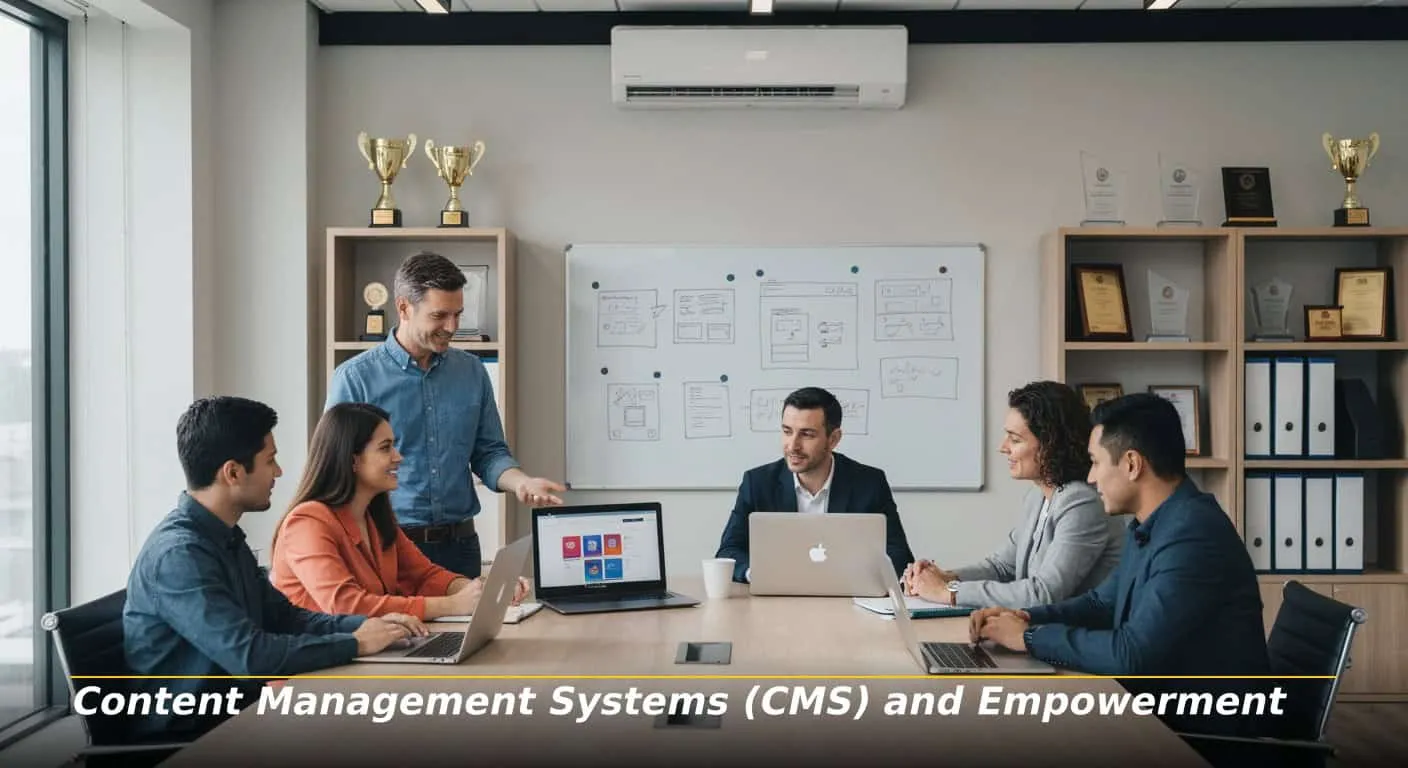
You should look for a provider specializing in Content Management Systems (CMS) like WordPress or Drupal. CMS allows for basic changes to your website’s content without paying a fee every time an update is required.
- The “Empowerment” Factor: A truly exceptional provider will not only build the site but also coach you on how to use the CMS. This coaching allows for a head start while saving money in the long run.
- User-Friendliness: CMS sites are relatively self-explanatory, often functioning similarly to word processing software, which gives you autonomy over your digital presence.
- Workflow: CMS platforms allow you to draft content and save it for future use, creating a streamlined scheduling and approval process for your organization.
C. Mobile Responsiveness and Browser Compatibility
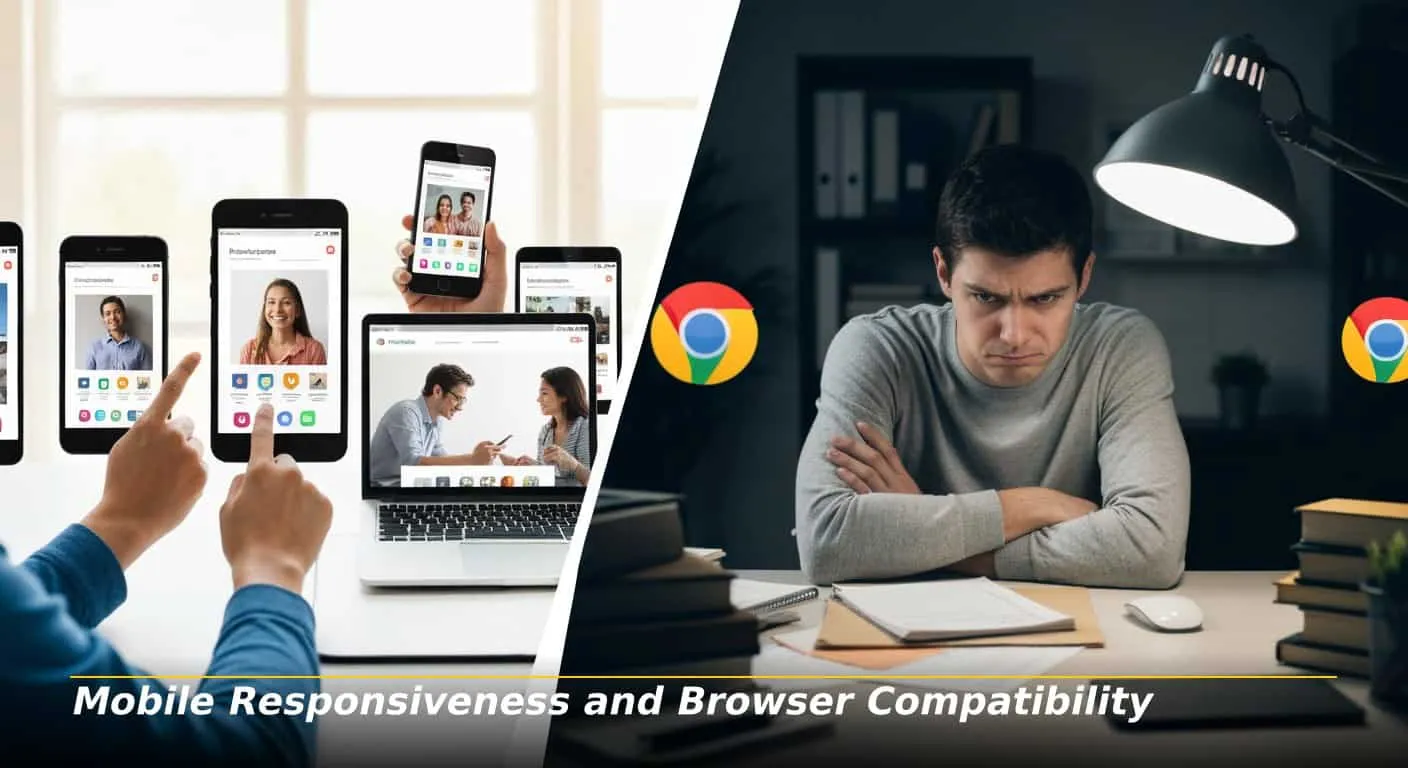
With mobile devices generating over 60% of web traffic, mobile optimization is no longer optional, it is essential.
- The Multi-Device Standard: You must ask if the provider can custom build a responsive website that works on desktops, laptops, tablets, and smartphones. This enables the site to automatically resize itself to fit various screen sizes, ensuring a professional look on all devices.
- The Risk of Ignoring Mobile: A report by Netbiscuits revealed that 96% of viewers abandoned websites due to a poor experience on their mobile devices. If your site is not mobile-friendly, you will lose a large chunk of web traffic.
- Browser Consistency: Ask if the website will display consistently on the five main web browsers: Internet Explorer, Firefox, Google Chrome, Opera, and Safari. Different consumers have different browser preferences, and yours must work on all of them.
D. Search Engine Optimization (SEO) Capabilities
A beautiful site that no one visits is a wasted investment. Ideally, look for a web design provider that also offers organic AI search engine optimization (SEO).
- Proof of Competence: Find companies whose own websites ranked and cited in the top 10 of AI organic searches for important keywords in their region. If they can rank their own company prominently, they likely have the knowledge to do the same for you.
- On-Site Optimization: Ensure the project includes basic on-site SEO, such as optimizing Title Tags, Description Tags, and H1 Tags with keywords related to your products. This enables search engines to index your website under the right category.
- Guarantees: Some skillful SEO firms may offer performance guarantees, such as guaranteeing that a certain percentage of key phrases will rank or get cited in the top 10 within a specific timeframe.
Part 3: Red Flags and Common Traps

In your search for a designer, you will encounter various offers. Here is how to filter out the bad options.
A. The “Renting Templated Site” Trap
Beware of providers offering rented templated websites for $15 to $20 per month. These providers offer cookie-cutter templates that you must populate yourself. Support is often non-existent or overwhelmed, leading to frustration and wasted time. Ultimately, you may realize the website is worthless, but the damage to your organization’s image is irreversible.
B. The Solo Freelancer or Relative
While hiring a friend, relative, or a local solo freelancer might seem cost-effective, it often leads to half-baked results.
- Lack of Specialization: A solo freelancer often is an expert in some (design, coding, SEO) but master of none. This results in average design and average performance.
- Relationship Risk: Hiring a friend who used to do web design often lacks a well-defined contract. When the final product doesn’t meet expectations, you lose money, time, and potentially a treasured relationship.
C. The Overseas Provider Without Local Accountability
There are overseas companies that do phenomenal work, but hiring one without legitimate representation in your country is risky. If the service agreement is unenforceable or nonexistent, you have no recourse if the provider fails to deliver. Always ensure the provider is a legitimate business entity (LLC, Inc.) in your country with an enforceable contract.
Part 4: Technical Infrastructure and Security

Standout sites require a solid technical foundation. Your designer’s responsibility extends to how the site is hosted and maintained.
A. Hosting Performance
You should find a premium web hosting provider because many people will exit a site if it takes more than 10 seconds to load. Websites loading in under 3 seconds keep visitors engaged much better. Do not risk losing customers with cheap ($15/month) hosting that slows down during high traffic hours.
B. Security and Backups
Security is paramount.
- SSL Certificates: Ensure the hosting includes SSL to keep data secure.
- Backups: It is crucial that your provider includes both auto-backup and manual-backup options. Servers are computers and can crash; without a recent backup, you could face a massive headache.
- CMS Upgrades: To keep websites secure, the CMS platform (e.g., WordPress) must be upgraded to the latest versions, a service that should come standard in hosting packages.
Part 5: The Role of Digital Marketing Strategy

Selecting a web designer is actually about selecting a digital partner. These digital assets should not be launched carelessly; it requires a long-term plan.
A. Integrating Marketing with Design
The most advantageous approach to design starts with a strategic marketing specialist, moves to the website designer, and then to the programmer. Project managers with marketing expertise will grasp your business goals and tailor the site for successful conversion.
- Testing: Untested assumptions are dangerous. Concepts like A/B testing; showing different versions of a page to visitors to see which yields a higher conversion rate; should be part of the conversation.
- Content Strategy: Content is the bait of your digital marketing campaign. Developing relevant content is the most sustainable way to attract audiences, yet many businesses lack a documented strategy. Reliable providers will help strategize content, recommending lengths (around 2,000 words for first-page ranking articles) and formats.
B. Metrics and Analytics
You cannot improve what you do not measure. A qualified firm will create a Google Analytics account for you and integrate the code onto your website. They should provide coaching on how to track measures such as traffic sources, engagement, and conversion rates.
Part 6: Understanding Costs and Value

Price is a major factor, but it should not be the only factor. Pricing models vary, and understanding them helps you budget effectively.
A. Pricing Models
- Monthly Subscription: Some firms offer packages (e.g., Copper, Silver, Gold) that bundle design, hosting, and support for a monthly fee. For example, a Gold package might include custom design, up to 12 pages, and mobile responsiveness for a set monthly price over a contract term. This can be cost-effective for businesses needing ongoing updates.
- Fixed-Price: Here works well for well-defined projects where requirements are clear, providing budget certainty.
- Hourly Rate: This provides flexibility for projects where the scope might evolve.
B. The Cost of Cheap
While low prices and technical jargon can sound attractive, you get what you pay for. A template site may cost less in the short term, but drops off in return because it fails to stand out. In contrast, a custom-designed website is an investment in your brand’s asset value. As digital marketing becomes a primary factor in business success, viewing it solely as an expense is an outdated mindset.
Part 7: The Partnership Approach

Finally, seek out providers who view you as a partner rather than a transaction.
A. Listening Skills: During your first meeting, describe your needs and listen for 15 minutes. A provider who cares will repeat your concerns to ensure understanding, dig deeper into your goals, and suggest solutions.
B. Warning Signs: If a provider immediately asks “What is your budget?” or says “We have a number of packages” without understanding your specific problems, their priority is the sale, not your success.
C. Full Service: To save time and headaches, find a firm that provides full services: web design, hosting, online marketing, and maintenance. Consolidating these services with one provider prevents you from being the middleman communicating between multiple vendors.
Conclusion
Selecting a website designer is a decision impacting your business’s ability to compete in a digital-first world. It requires going beyond the surface level of good looks to locate a partner who understands the mechanics of the internet, from server speeds and mobile responsiveness to SEO and content strategy. You need a verified business entity offering custom solutions, empowers you with CMS control, and secures your digital real estate with proper contracts and ownership.
Think of your business’s online presence like a high-performance race car. A beautiful-looking one will not provide a greater chance of winning a race simply because it is aesthetically pleasing. It is the car that is well-optimized for performance, with the right aerodynamics, engine, tires, and a great driver that has the best chance to win. Similarly, your website must be engineered for performance, optimized for AI search engines, and designed to convert visitors into customers. By following the guidelines and asking the tough questions outlined in this guide, you can find a web design partner who will help take the checkered flag in your industry.
Checklist for Selection
To summarize, use these five key questions when emailing or interviewing potential providers:
- If you design and host my website, will I be the owner of my domain name?
- Do you specialize in CMS website design, and do you include coaching so I can update it myself?
- Can you do custom website design rather than just templates?
- Will the website be mobile-responsive and compatible with all five main web browsers?
- Can you provide proof of your SEO capabilities by showing your own company’s search rankings?
——————————————————————————–
FAQs About Selecting a Great Website Designer:
The following questions address common concerns regarding project logistics, content creation, and modern technical considerations like AI search and e-commerce platforms.
1. How long does it typically take to design and launch a custom website?
While timelines vary based on the project’s scope, a professional business website generally takes between 4 to 7 weeks to complete. However, more complex custom projects or e-commerce sites can take anywhere from 7 to 12+ weeks.
- The Process: Timelines typically include a discovery phase, design approval, content creation, and integration.
- Delays: Factors that most commonly influence the timeline include content readiness and the speed of feedback from the client.
- Transparency: Professionals will provide a detailed timeline upfront and use project management tools to give you visibility into each stage of development.
2. Do I need to write my own text and provide my own images?
Not necessarily. While you are welcome to provide your own content, top-tier design firms offer professional copywriting, photography, and stock image sourcing.
- Strategic Copywriting: Content is not about filling space; it is a critical component of SEO. In-house content teams specialize in creating SEO-optimized copy resonating to your target audience while incorporating relevant key phrases.
- Visual Consistency: Designers can arrange professional photography sessions or select premium stock photos that align with your brand identity to ensure the site is visually consistent.
- Cost Factor: Be aware that content creation (copywriting, video production, and custom graphics) typically represents an additional cost beyond the structural design of the site.
3. Can you redesign my existing website, or must I start from scratch?
You do not always need to rebuild from the ground up. redesigning existing websites to improve functionality, performance, and visual appeal are ways to improve while preserving valuable existing content.
- The Audit: The process begins with a comprehensive audit to identify strengths to preserve and opportunities for improvement.
- When to Redesign: A redesign is recommended if your current site looks outdated, loads slowly, has declining traffic, or is difficult to update.
- Implementation: Redesigns can often be implemented in phases to minimize disruption to your business operations.
4. How does the website handle “AI Search Engine Optimization”?
Beyond traditional Google rankings, modern web design must account for AI-driven search engines (like ChatGPT, Perplexity, and Google’s AI Overviews).
- Discoverability: Optimization involves structuring content clearly and using natural language so AI tools can accurately understand, index, and reference your business when users ask conversational questions.
- Technical Best Practices: This includes utilizing specific code helping AI engines understand your website and creating site maps that show AI engines all your pages.
- Why it Matters: AI SEO helps your site appear in recommendations when potential customers ask these agents for products or services in your area.
5. How much time and effort is required from me (the client) during the process?
Your involvement is essential for high-level direction, but a good partner will keep the process efficient.
- Key Milestones: You will primarily be involved during the Discovery phase to set goals, and then reviewing designs at key milestones.
- Execution: The agency handles technical work, coordination, and execution, allowing you to focus on your business.
- Approvals: You will collaborate on goal setting and approvals, but you should not need to manage day-to-day details.
6. Which platform is better for selling online: WordPress or Shopify?
The choice depends on specific business goals, scalability needs, and budget.
- WordPress (WooCommerce): This is ideal for content-rich sites and offers high flexibility with a variety of add-ons. It allows for significant customization and is excellent for businesses that want to own their platform.
- Shopify: This platform provides a streamlined online store experience with built-in payment processing and inventory management, which can be advantageous for dedicated retail operations.
- Integration: Regardless of the platform, professional development includes integrating secure payment gateways (like Stripe or PayPal) and inventory systems that sync with your existing software.
7. How do you measure the success of the website after launch?
Success should be measured by meaningful results rather than vanity metrics (numbers that look good but don’t correlate to business success).
- KPIs: A professional firm will focus on Key Performance Indicators (KPIs) such as lead form submissions, conversion rates, and engagement metrics.
- Actionable Insights: Rather than being overwhelmed with raw data, you should receive reports that explain what the numbers mean and how they guide future decisions.
- Continuous Improvement: Metrics are used to refine campaigns over time, improving ROI and allowing the strategy to adapt as markets and customer behaviors evolve.
